Critical perspective of professors from Nalut University on the paths of the Libyan dialogue (Skhirat, Geneva, Tunisia) at the seminar "Political Roadmap" at Gharian University
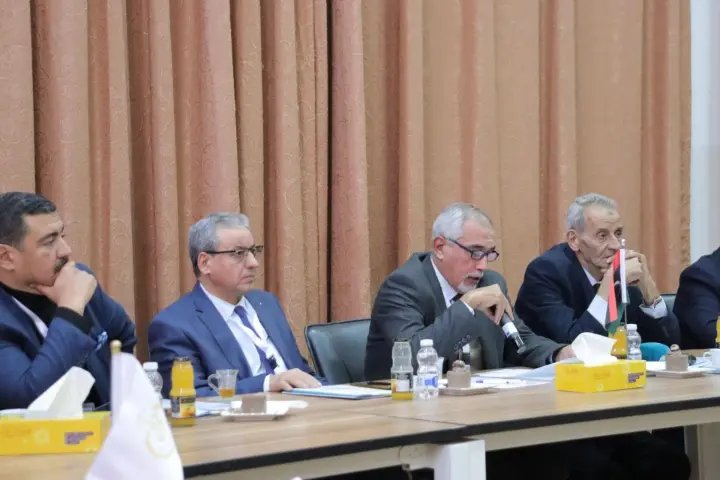
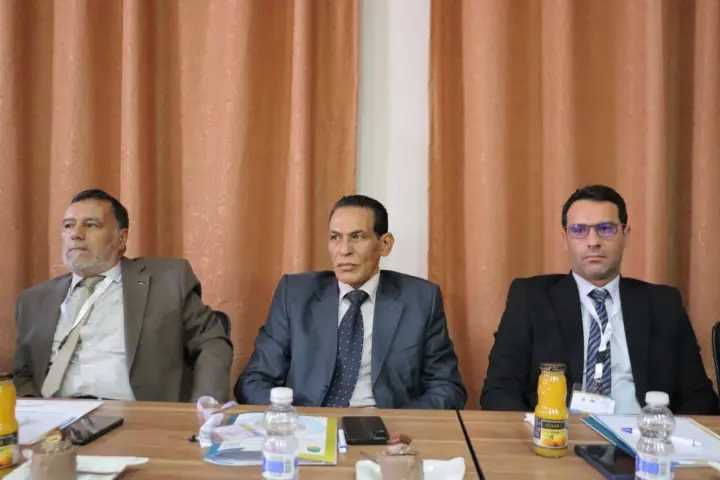
In a step that embodies the pioneering role of Libyan universities as beacons of thought and national centers of expertise, Nalut University made a prominent presence at the dialogue seminar hosted by the Faculty of Law and Political Science at the University of Gharian on Thursday, December 25, 2025.
The seminar was titled "The Libyan Political Roadmap: Lessons Learned from Previous Dialogues (Skhirat, Geneva, Tunisia)," and it featured the participation of a select group of political and legal experts from various universities, along with representatives from the High Council of State and civil society organizations.
Representing Nalut University at this scientific and political event were
Prof. Dr. Al-Hussein Salem Ghaith: Professor at the Faculty of Law - Al-Ruhaybat Branch
Dr. Ayman Suleiman Al-Khamaisi: Dean of the Faculty of Law, Nalut
Prof. Dr. Ilyas Abubakr Al-Barouni: Dean of the Faculty of Economics and Political Science at Nalut University
Professors from Nalut University provided a deep critical perspective on previous political agreements, focusing their interventions on the following key points:
Overcoming the Text Crisis: Participants confirmed that the Libyan dilemma does not lie in the drafting of agreements, but in the absence of genuine political will to implement them.
Constitutional and Institutional Integration: The professors emphasized the necessity of a close link between the political process and comprehensive constitutional reform to ensure the sustainability of any future solution.
Ending the logic of "rotation": They called for the necessity of breaking out of the cycle of recurring crises by unifying sovereign institutions and building a solid constitutional legitimacy.
This participation comes to affirm that Nalut University does not limit itself to its educational role, but rather fulfills its responsibility as a key national actor contributing to the production of political knowledge and providing realistic alternatives for decision-makers. The attendees unanimously agreed that achieving a sustainable solution in Libya necessarily requires guidance from serious academic discussions, away from temporary settlements.